
Keeping Lighting Control Simple
“I just want simple on/off lighting.”
This is something both homeowners and interior designers often say to us. Yet the same lighting plan may include several layers such as downlights, pendants, wall lights, 5-amp floor/table lamps and integrated LED details.
Layering lighting loads is what gives a room depth, warmth and atmosphere. But it also raises a practical question. How should all of these lights actually be controlled?
Most clients do not want multiple switches across the wall, several rotary dimmers to adjust individually, or every light coming on at once. What they really want is intuitive control.
This is where a well-designed lighting control system quietly does its job by simplifying the experience of a beautifully layered scheme.
For many rooms, just three settings are all that is needed.
Bright for functional light.
Relax for a balanced ambient scene.
Off for everything off.
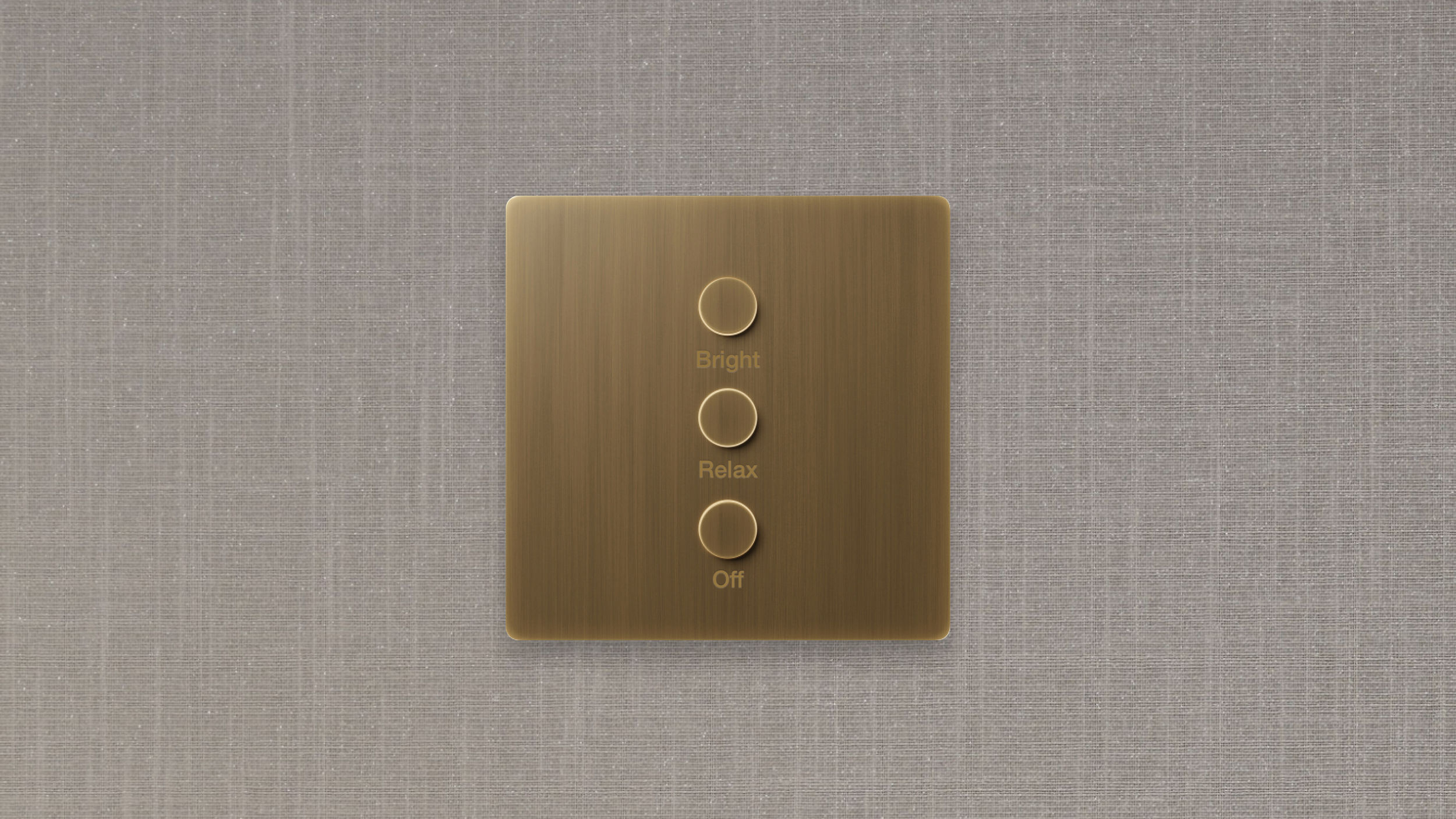
Lutron Alisse Keypad
This customised Lutron Alisse keypad is a perfect example. Three beautifully engraved buttons, Bright, Relax and Off, replace an entire bank of switches. The lighting design remains sophisticated, but the user experience is completely straightforward.
In some spaces there is also a desire to control blinds alongside lighting. This does not require another wall plate, simply requires a thoughtful keypad design. This Lutron Vierti keypad offers the same three lighting scenes with two discreet arrow buttons that can be used for shading control, for example blinds up and down. One elegant interface can therefore manage both lighting and shading without adding visual or operational complexity
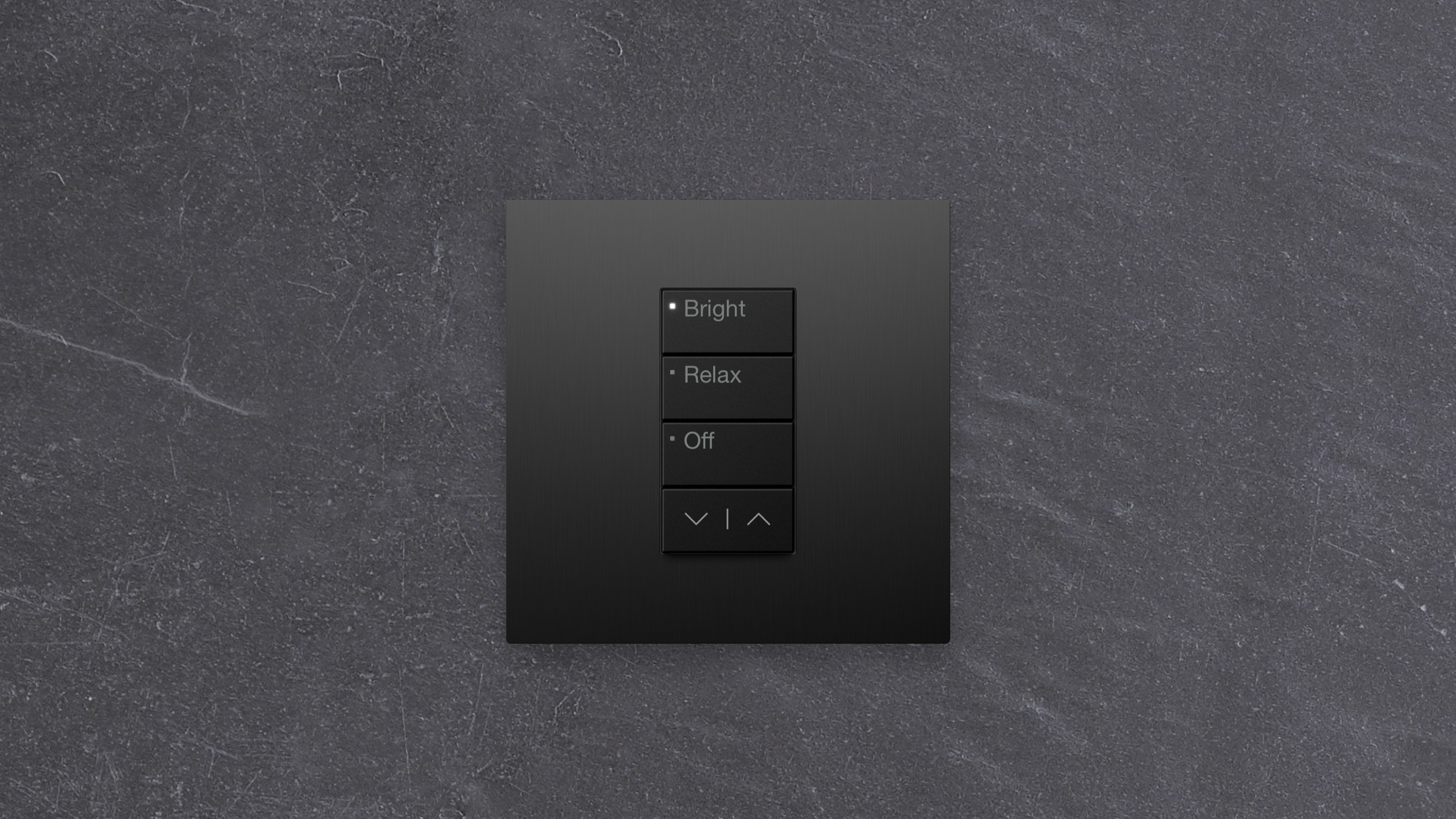
Lutrin Vierti Keypad
Lighting control systems sometimes gain a reputation for being complicated because keypads are presented with too many buttons that do not serve a clear purpose. Many manufacturers including Lutron, Crestron, Rako and Control4, provide standard plates with five or six-button layouts. If every button is programmed with a different scene simply because it is available, the result can feel confusing rather than refined.
In reality, most rooms only need a small number of meaningful lighting states, and there are keypads that can be fully customised to allow for this. Good lighting control design is about simplicity and choosing scenes that reflect how a space is actually used.
When approached this way, lighting control allows layered lighting to feel natural, intuitive and exactly as clients request. Simple.
If you are planning a project and would like lighting that feels beautifully simple to live with, we would be very happy to advise.